The Genetics you need to grow mushrooms
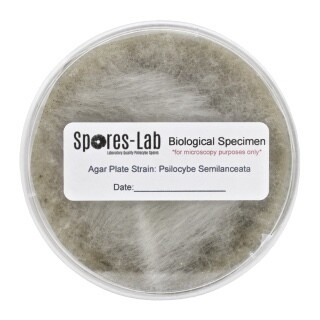
Psilocybe natalensis is a species of psilocybin mushroom in the family Hymenogastraceae. It is found in South Africa. The specific epithet refers to its type locality in Natal. The species was described as new to science in 1995 by Jochen Gartz, Derek Reid, Michael Smith, and Albert Eicker. It is very closely related to Psilocybe cubensis, and differs in its habitat preference, less persistent annulus and genetic sequence.
Spores Lab acquired our Psilocybe Natalensis genetic (in the format of a wild mushroom spore print) in late 2021, from a local BC mycology enthusiast. Since then we have been hard at work since isolating and refining the genetic to prepare it for sale. We are now confident in offering it, and will continue to refine and culture indefinitely.
Spawning Psilocybe Natalensis mycelium can be done in a similar fashion to Cubensis (rye, wheat, oat, corn or other grains can be used) however they require the addition of ligneous material (wood) to the substrate in order to fruit. You must add hardwood chips or sawdust to your substrate, and fruiting can be done in similar conditions to cubensis. Typically this species yields less than Cubensis and is quite difficult to cultivate indoors, however has significantly higher potency.
FORMAT INFORMATION
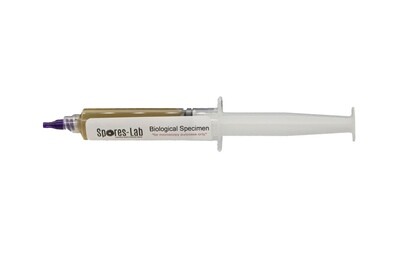
Agar Culture Option Includes: 1x Psilocybe Natalensis Isolate Agar culture in a 100x15mm Parafilm-wrapped Petri Dish.
AGAR CULTURES ARE MOST VIGOROUS IF USED WITHIN 2-3 MONTHS OF RECEIPT.
FRESHLY PREPARED FOR EVERY ORDER.
Our agar plates are not kept as pre-made inventory. Instead, each plate is prepared specifically for your order to maximize freshness, culture health, and viability.
While your selected variety may occasionally be available and ready to ship immediately, most agar plates are MADE TO ORDER. Please allow approximately 3 weeks for production before shipping.
Each plate is prepared under sterile laboratory conditions and carefully inspected prior to shipment.
SPECIES INFORMATION
Habitat: South Africa
Climate: subtropical
Strain Origin: Described as new to science in 1995 by Jochen Gartz, Derek Reid, Michael Smith, and Albert Eicker
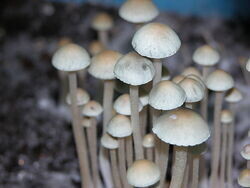
Cap: 1cm to 8cm in diameter, tall, varies in shape from sharply conical to bell-shaped, often with a prominent papilla (a nipple-shaped structure), does not change shape considerably as it ages, hygrophanous, ochraceous to pale brown to dark chestnut brown, when dry becomes much paler, a light yellow-brown colour. Moist mushrooms have sticky surfaces that result from a thin gelatinous film called a pellicle
Stem: 45–140 mm (1.8–5.5 in) long, 1–3.5 mm (0.04–0.14 in) thick, usually slightly thicker towards the base, yellowish brown
Gills: Adnate to sinuate attachment to the stipe, and are initially cream to pale gray brown
Spores: Purplish brown, subellipsoid on 4-spored basidia