The Genetics you need to grow mushrooms
Spores Lab is excited to announce the release of a variety we have been developing for nearly 1 year. CODE BLUE has been developed by Spores Lab's Lab manager who has managed to cross 2 different mushroom species! CODE BLUE is a hybrid between Goldmember psilocybe cubensis, and Psilocybe Natalensis.
- Psilocybe natalensis is a species of psilocybin mushroom in the family Hymenogastraceae. It is found in South Africa. The specific epithet refers to its type locality in Natal. The species was described as new to science in 1995 by Jochen Gartz, Derek Reid, Michael Smith, and Albert Eicker. It is very closely related to Psilocybe cubensis, and differs in its habitat preference, less persistent annulus and genetic sequence.
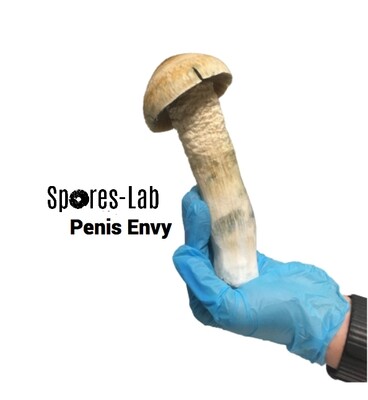
- Goldmember is a hybrid between Golden Teacher and Penis Envy, which inherits the best traits from each of its genealogical parents. This variety consistently produces large, dense and beautifully bruised mushrooms, which are also exceptionally potent! Spores Lab's Master Grower has personally developed this variety, choosing our best isolates of GT and PE, and refining the resulting hybrid for nearly an entire year!
CODE BLUE inherits the higher-than-average potency possessed by both of its lineages, and grows easily in psilocybe cubensis growing conditions. If you are looking for a new and unique variety to add to your collection, we highly recommend CODE BLUE.
Code Blue was named in loving memory of our good Friend and supporter Mr Keith Anderson
This variety is ONLY available on Spores Lab
FORMAT INFORMATION
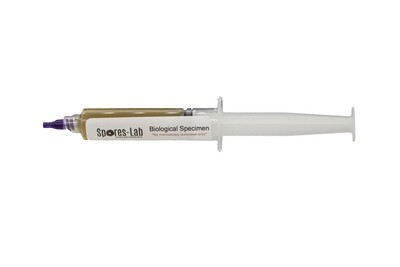
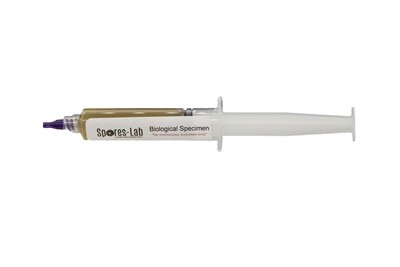
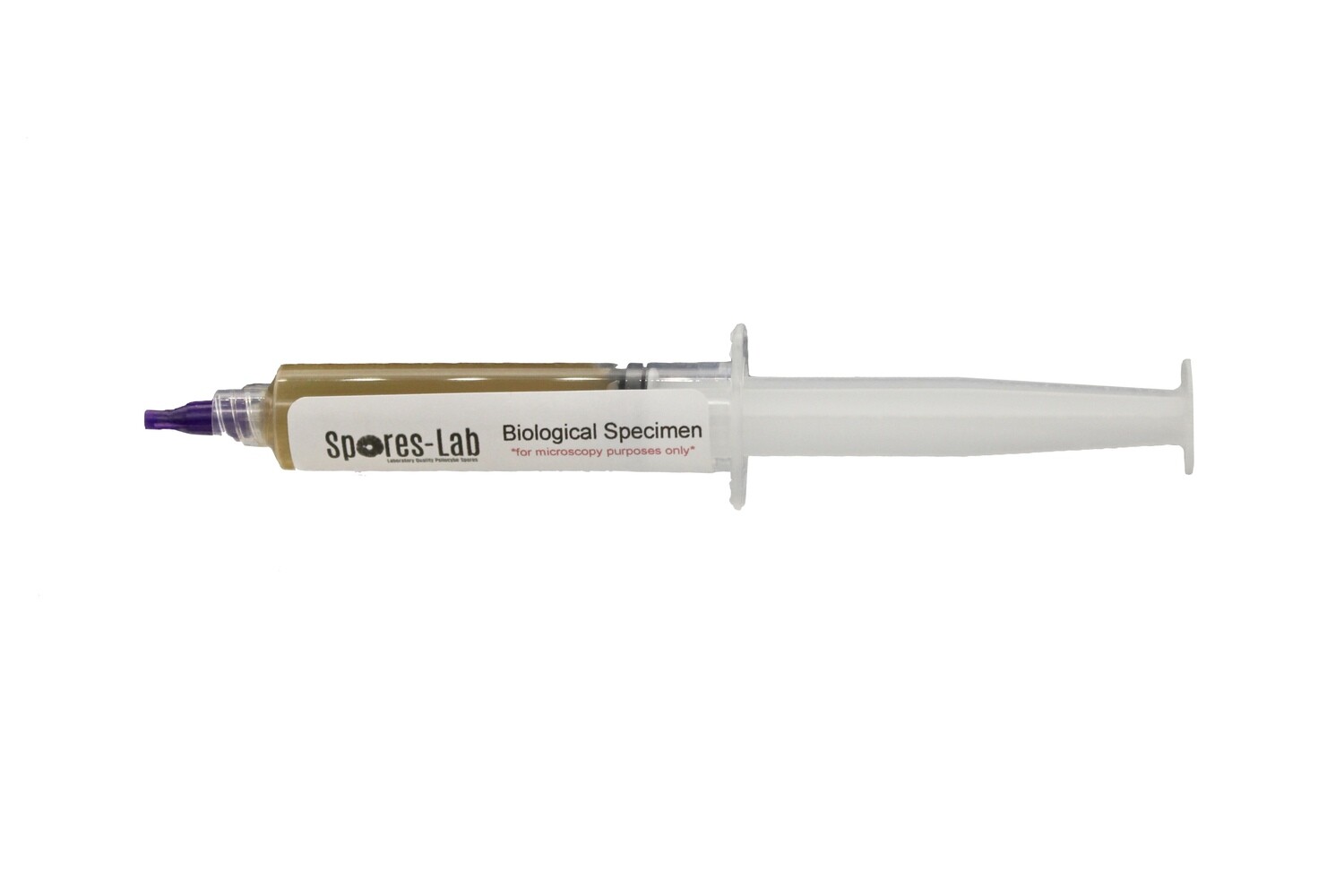
Liquid Culture Syringe Option Includes: 1x Code Blue Enigma Liquid Culture syringe, 1x Sterile 18ga needle.
LIQUID CULTURES SHOULD BE REFRIGERATED, AND ARE MOST VIGOROUS IF USED WITHIN 2-3 MONTHS OF RECEIPT.
Agar Culture Option Includes: 1x in a 100x15mm Parafilm-wrapped Petri Dish.
AGAR CULTURES ARE MOST VIGOROUS IF USED WITHIN 2-3 MONTHS OF RECEIPT.
FRESHLY PREPARED FOR EVERY ORDER.
Our agar plates are not kept as pre-made inventory. Instead, each plate is prepared specifically for your order to maximize freshness, culture health, and viability.
While your selected variety may occasionally be available and ready to ship immediately, most agar plates are MADE TO ORDER. Please allow approximately 3 weeks for production before shipping.
Each plate is prepared under sterile laboratory conditions and carefully inspected prior to shipment.
Master Culture Option Includes: 1x Fully Colonized Code Blue Enigma culture in a 3L spawn bag.
MASTER CULTURES SHOULD BE USED UPON RECEIVING.
FRESHLY PREPARED FOR EVERY ORDER.
Our 3L spawn bags are not kept as pre-made inventory. Instead, each plate is prepared specifically for your order to maximize freshness, culture health, and viability.
While your selected variety may occasionally be available and ready to ship immediately, most 3L spawn bags are MADE TO ORDER. Please allow approximately 3 weeks for production before shipping.
Each bag is prepared under sterile laboratory conditions and carefully inspected prior to shipment.
SPECIES INFORMATION
Habitat: Grains, Bovine/Equine Dung and Enriched Soils (MYCO-PRO™ Spawn Medium & MYCO-PRO™ Fruiting Medium are recommended)
Climate: Subtropical
Strain Origin: 2022 Developed by Spores Lab Master Mycologist in our Laboratory.
Cap: 20-50 mm in diameter, concave to slightly convex at maturity. Reddish brown maturing to golden caramel to amber. Flesh white soon bruising very blue.
Stem: 50-100+ mm in length, bright white. Flesh bruising very blue where injured. Persistent membranous annulus (ring) from partial veil that becomes dusted with purple brown spores at maturity.
Gills: Attachment adnate to adnexed. Grayish coloration in young fruit bodies becoming nearly black in maturity.
Spores: Dark purplish brown, subellipsoid on 4-spored basidia