CONTACT US FOR 3L SPAWN BAGS! MADE TO ORDER, 3 WEEK LEAD TIME


MYCOLOGY
The scientific study of fungi
Fungi exist as microscopic networks or visible fruiting bodies, quietly shaping ecosystems through regeneration and exchange.
Their biology reflects resilience, adaptability, and constant variation.
This space offers a grounded entry point into understanding and working with fungal systems.
At Spores Lab, we focus on clean genetics, reproducibility, and accessible pathways into working with fungi.

Growing Media Recipes
Different stages of the mushroom life cycle require different growing mediums.
Each formula is designed to support optimal nutrient availability, moisture balance, and microbial control at its respective stage.
Liquid culture and agar are typically used in more controlled environments and are best suited for those with experience and proper equipment.
Spawn and fruiting substrates, on the other hand, can be prepared with minimal equipment and readily available materials.
Three core mediums used across the cultivation process:
Select each image to view the full recipe

Liquid Culture Recipe
Using a Liquid Culture as an inoculant can drastically accelerate colonization

Agar Petri Dish Recipe
Agar is an excellent medium for propagating and refining cultures

Fruiting Medium Recipe
Fruiting substrate provides water-retention, & significantly increases yields
Mushroom Growing "Teks"
Different stages of the mushroom life cycle require different growing mediums.
Each formula is designed to support optimal nutrient availability, moisture balance, and microbial control at its respective stage.
Liquid culture and agar are typically used in more controlled environments and are best suited for those with experience and proper equipment.
Spawn and fruiting substrates, on the other hand, can be prepared with minimal equipment and readily available materials.
Three core mediums used across the cultivation process:
Select each image to view the full recipe


PF Tek -
The most simple method of cultivation, great for beginners, exceptionally cost effective, however low-yielding
Spawn + Bulk Substrate Tek - Excellent for growing at any scale when maximum yield is desired, however costs more and takes longer than PF Tek (our tutorials are a spawn + bulk substrate tek with a few modifications)
Can be used in conjunction with the spawn + bulk substrate tek (mycelium is spawned in an uncle bens rice container, then the spawn + bulk substrate tek is followed)
Clean Work Esssentials
Sterility is one of the most important variables in successful cultivation.
In addition to genetics and growing mediums, a small set of supporting supplies helps maintain a clean environment and reduce contamination risk throughout the process.
These are simple, accessible tools used to support consistency and control.




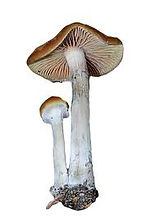
Mushroom Anatomy

Pileus (Cap) - Thought to contain 10-15% higher concentration of active compounds
Velum (veil) - A thin gelatinous membrane separating cap from stem. Breaks when mushrooms reach maturity.
Stipe (stem/stalk) - Makes up the majority of the mushroom fruiting body by weight.
Bluish Bruising - An indicator of high Psilocin content (Psilocin is dephosphorylated Psilocybin)


Successful cultivation depends on more than just the species selected.
Creating a clean, controlled environment is essential, as the same conditions that support fungal growth can also allow contamination to develop rapidly.
Consistency in sterile technique, properly prepared substrates, and appropriate equipment all play a critical role in achieving reliable results.
With the right setup and high-quality genetics, cultivation can be approached in a way that is both accessible and repeatable.
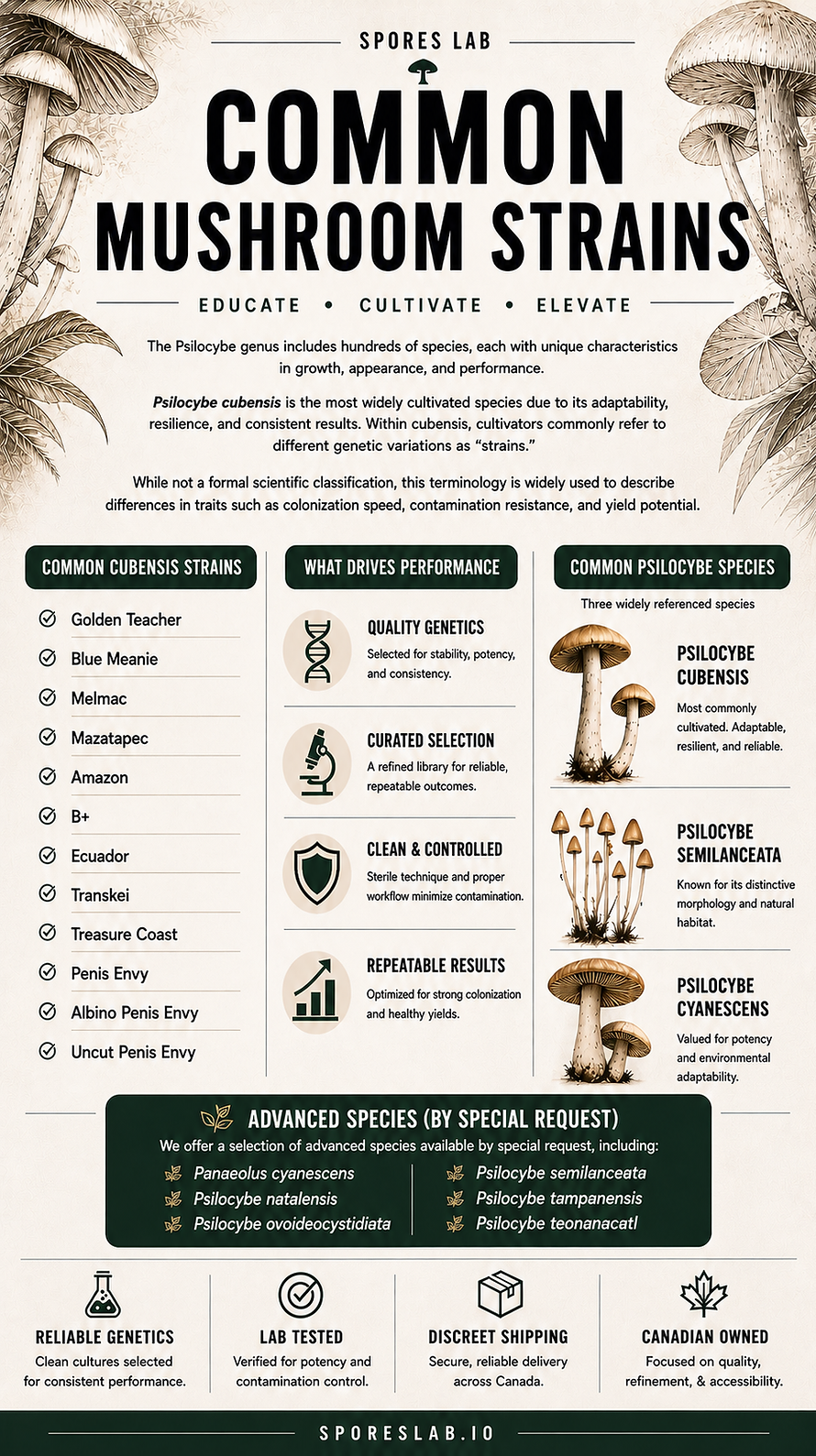

To learn more about strain characteristics, cultivation methods, and best practices, click the button below to explore our full blog and resource library.